
SAVOD (Subscription Ad-Supported Video On Demand)
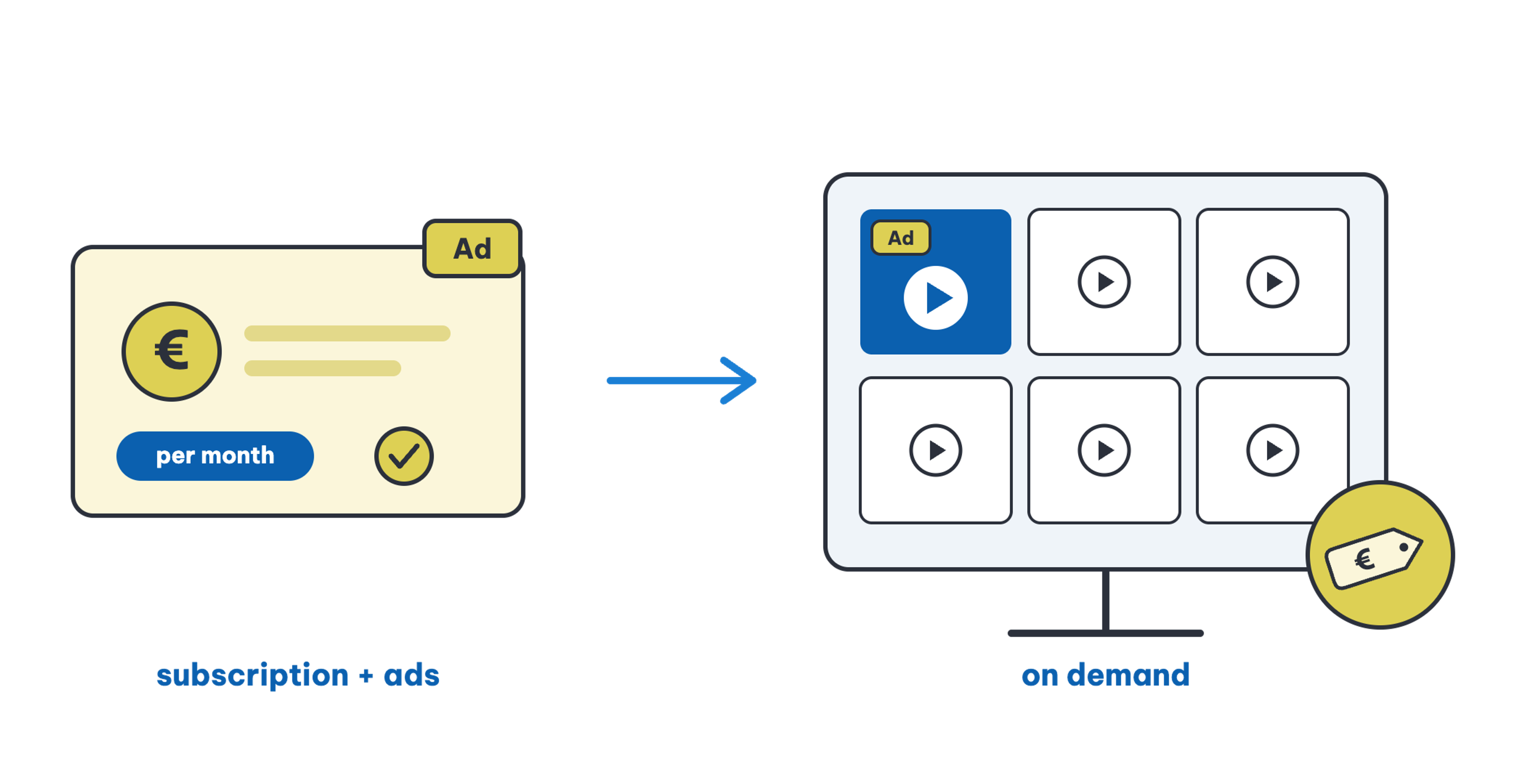
SAVOD is a streaming model in which viewers pay a fixed monthly subscription fee while also being shown advertising. It combines subscription revenue with advertising revenue. An increasing number of streaming services now offer a lower-priced ad-supported plan alongside a more expensive ad-free option.
The difference between SVOD and AVOD
SVOD (Subscription Video On Demand) refers to streaming services where viewers pay for access to content. AVOD (Advertising Video On Demand) refers to video-on-demand services that are funded wholly or partly through advertising. As more streaming services introduce paid subscriptions that also include advertising, the distinction between these models is becoming increasingly blurred.
IAB Europe uses the term Hybrid VOD (HVOD), among others, for paid streaming services with an ad-supported subscription model. Industry association DEG uses SAVOD specifically for video-on-demand services where viewers pay a fixed subscription fee and are also shown advertising.
Which platforms use SAVOD?
Netflix, Disney+ and HBO Max offer subscription plans that allow viewers to watch content with advertising at a lower monthly price, alongside a more expensive ad-free subscription. Amazon Prime Video uses a different variation of the same model: advertising is included as part of the standard subscription, while an ad-free option is available for an additional fee in various markets.
Videoland also offers a lower-priced subscription plan with advertising. In addition, its more expensive Plus and Premium plans may include limited advertising before, after or around the playback of content.
What does SAVOD mean for advertisers?
For advertisers and media agencies, SAVOD creates additional advertising inventory within professionally produced streaming content. This makes it possible for video campaigns to reach viewers who have shifted part of their viewing time from linear television to streaming.
Depending on the provider, advertising inventory may be purchased directly, programmatically or as part of a broader Total Video proposition. This brings together video advertising across television, streaming and online video. Targeting options vary by platform and provider.
Example
A car brand wants to reach younger viewers in the Netherlands who consume relatively high levels of streaming video. Through a media agency, the brand buys advertising inventory within the ad-supported subscription plan of a streaming service. The video campaign is shown around the streaming content and, depending on the platform, can be targeted at specific audience groups.
Why is SAVOD relevant?
Streaming services are looking for ways to combine subscriber growth with advertising revenue. By offering lower-priced ad-supported subscriptions alongside ad-free plans, they create additional reach opportunities for advertisers within streaming video in the Netherlands.
SAVOD should not be confused with FAST (Free Ad-Supported Streaming TV). FAST is free for viewers and funded by advertising, whereas with SAVOD viewers pay for a subscription and are also shown advertising.


