
Customer Journey
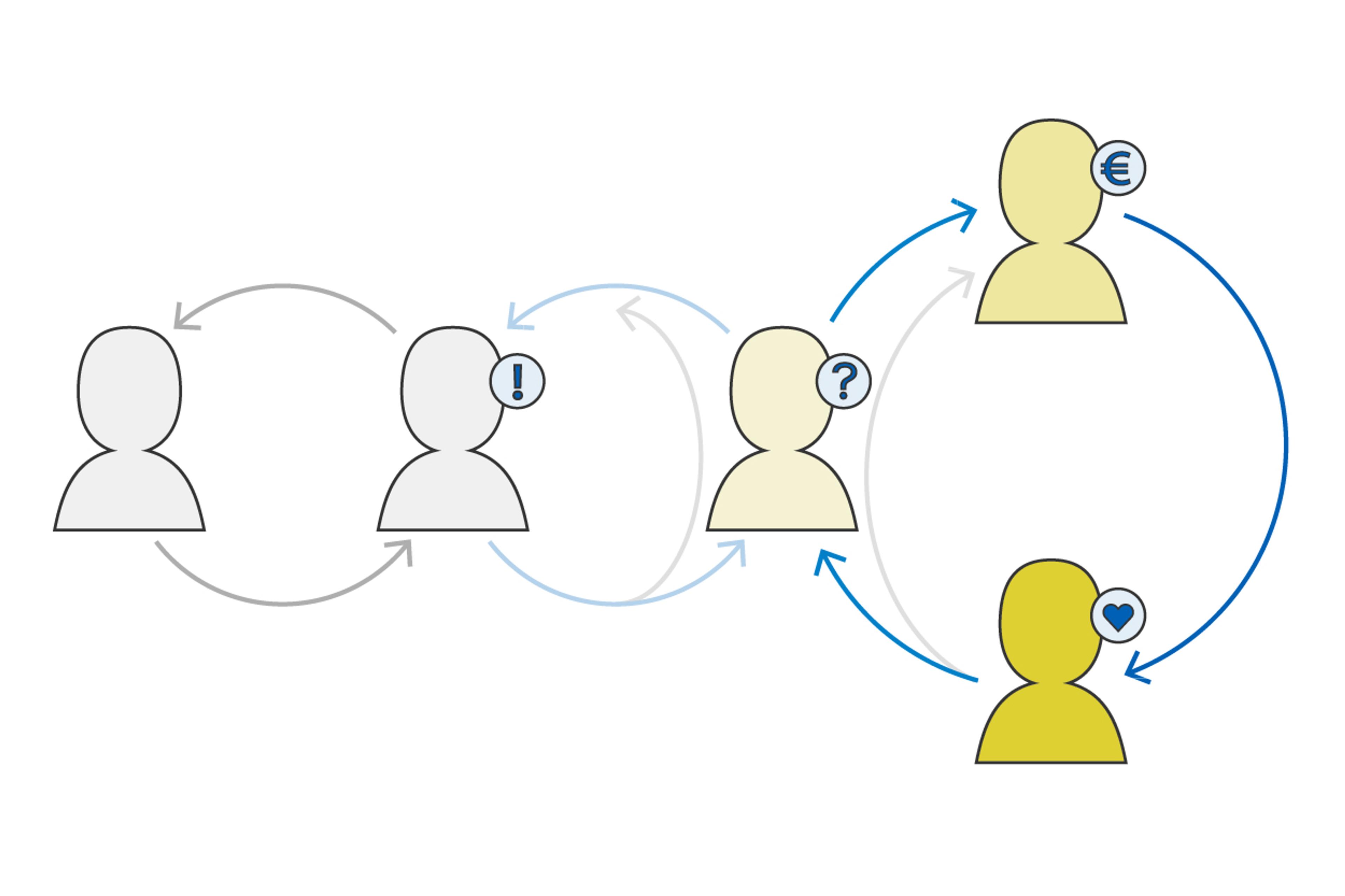
The customer journey describes every interaction and experience a (potential) customer has with a brand, product or service. It begins when someone first becomes aware of a brand and continues through the purchase, product usage, customer loyalty and, ultimately, recommendations to others.
The customer journey helps organisations understand how customers research, make decisions and build relationships with a brand. This insight enables marketing and communication activities to be better aligned with customer needs at every stage of the journey.
Stages of the Customer Journey
Although the exact framework may vary, the customer journey typically consists of the following stages:
- Awareness – The potential customer becomes aware of a brand, product or service.
- Consideration – The customer gathers information, compares alternatives and evaluates which solution best meets their needs.
- Decision – The customer decides to choose a particular brand, product or service.
- Purchase – The purchase is completed.
- Retention & Loyalty – After the purchase, the brand focuses on customer satisfaction, repeat purchases and building a long-term customer relationship through initiatives such as customer service, after-sales support, loyalty programmes and personalised communication.
- Advocacy – Satisfied customers actively recommend the brand through word of mouth, online reviews or social media, becoming ambassadors for the brand.
The Customer Journey and AIDA
The customer journey builds on the classic AIDA model (Attention, Interest, Desire, Action), but extends beyond the purchase itself. While AIDA primarily focuses on persuading a potential customer to make a purchase, the customer journey also includes the post-purchase stages, such as product usage, customer satisfaction, loyalty and advocacy.
The Customer Journey in Media and Marketing
Advertisers, marketers and media planners tailor their communication strategies and media choices to the different stages of the customer journey. Campaigns focused on awareness are designed to build brand recognition, while campaigns in the consideration and decision stages aim to inform, persuade and drive conversions. After the purchase, the focus shifts to customer retention, loyalty and encouraging positive recommendations.
By delivering the right message through the right channel at the right time, organisations can enhance the customer experience, increase conversion rates and build long-lasting customer relationships.


